
The other side of marketing at Rhodium

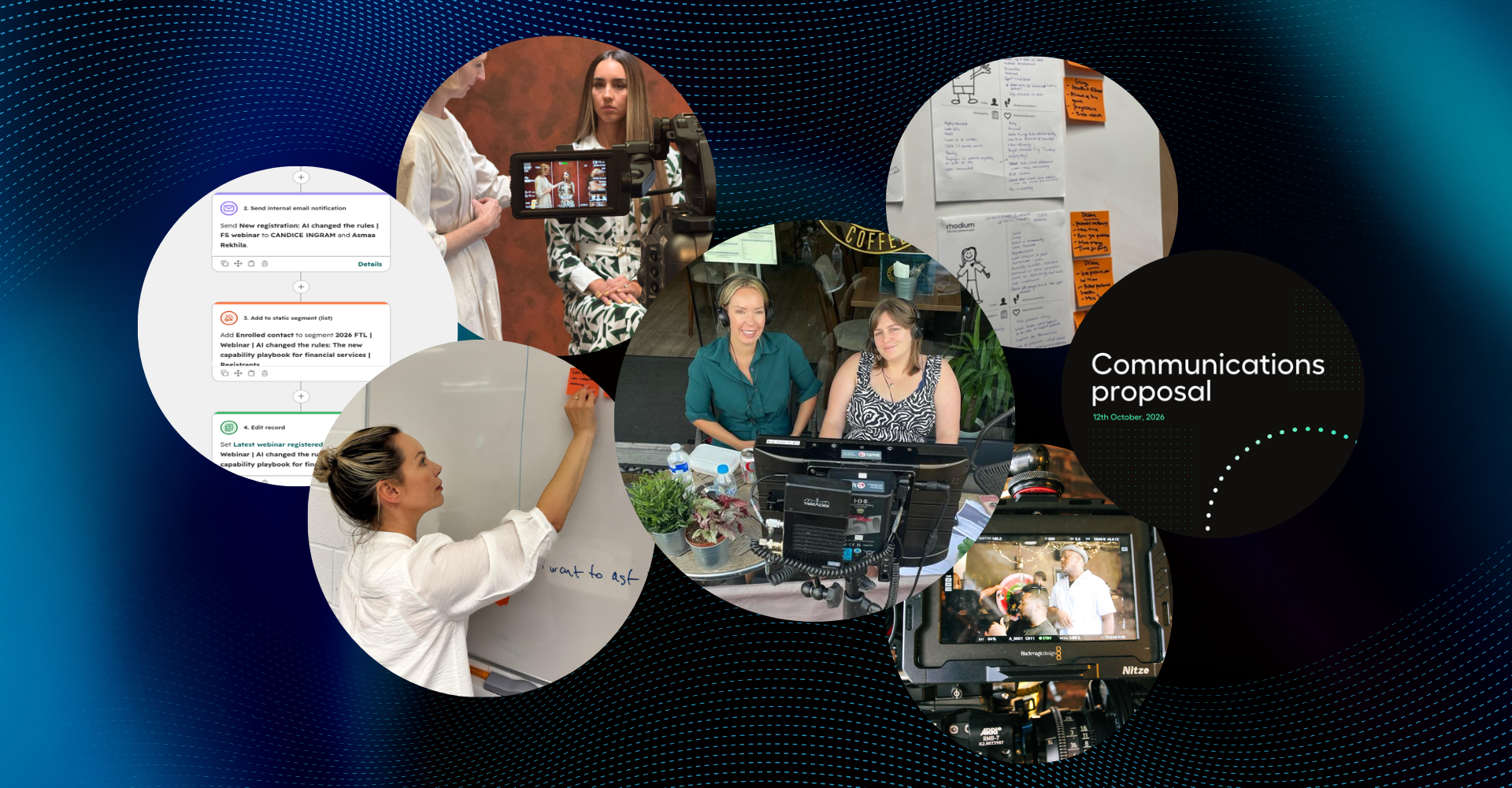
A fairly normal week for me at Rhodium can involve writing a proposal, working with Dan on a campaign concept, sorting out a HubSpot journey, briefing developers, planning an event, writing copy, talking through a website, producing a shoot, helping cast a music video or figuring out how three different marketing platforms need to talk to each other.
That’s partly life in a small creative agency.
But it made me think about the parts of my role – and Rhodium – that perhaps aren’t as obvious from the work we share.
I’ve worked in marketing for more than 20 years, both client and agency side. And while my role spans marketing, account direction and client services, a significant part of what I do is increasingly closer to Marketing Operations.
What does that actually mean?
For me, it’s about making sure all the individual bits of marketing work together.
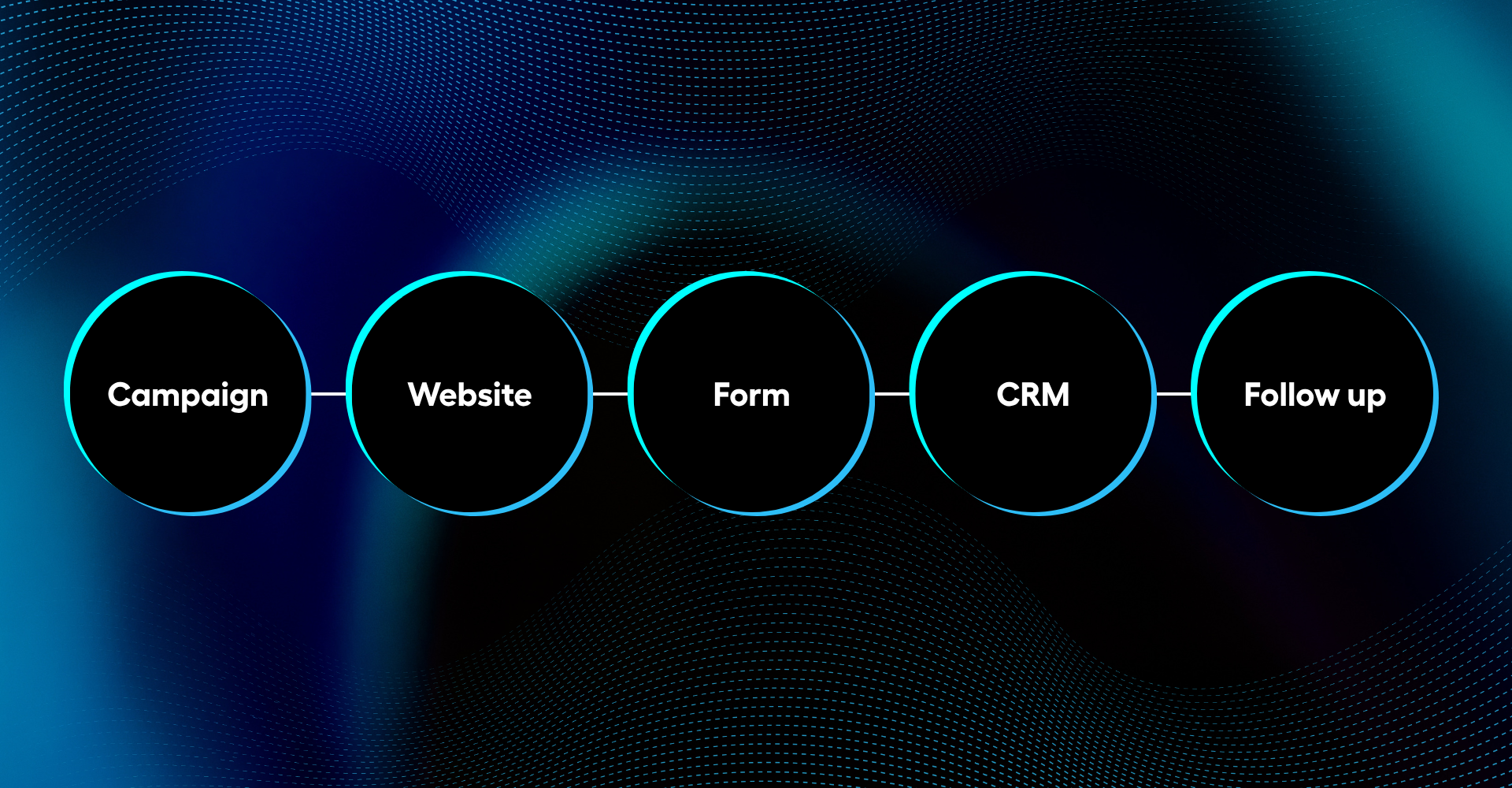
Take a campaign. The creative is one part of it, but where are we sending people? What happens when they get there? What information do we need to capture? How does it get into the CRM? What should they receive next? When should sales follow up? What information do they need? And what do we need to put in place to know whether any of it is working?
The same applies to events. There’s the event itself, but also the invitation and registration journey, website, CRM data, reminders, content, follow-up and what happens to those contacts afterwards.
The complexity comes when all those things need to work together.
Increasingly, that’s where I sit.
CRM is a good example
I’ve worked with HubSpot for around seven years and these days I’m often involved in much more than sending an email or building a form.
I might be looking at CRM structure and data quality, properties and segmentation, workflows, campaign set-up, forms, customer journeys, dashboards or how HubSpot needs to connect with something else a client is using.
A piece of work that landed on my desk this week is a good example.
A retained client is building a more structured outbound approach. They’re bringing new prospect data into the business, segmenting it by things like sector and role, and using an outbound platform for email and LinkedIn activity, with HubSpot sitting at the centre.
I’m not the person who should be configuring every technical integration. There are specialists for that.
My role is working out how the whole process needs to work from a marketing and sales point of view.
What data do we actually need? What belongs in HubSpot? What have we already got? How should prospects be segmented? What could we use for personalisation? What happens when somebody engages? What does sales need to see? And what needs to come back into HubSpot?
Once we’ve made those decisions, the people who know the platforms inside out can configure them properly.
Otherwise, it’s very easy to connect a load of technology together without really solving anything.
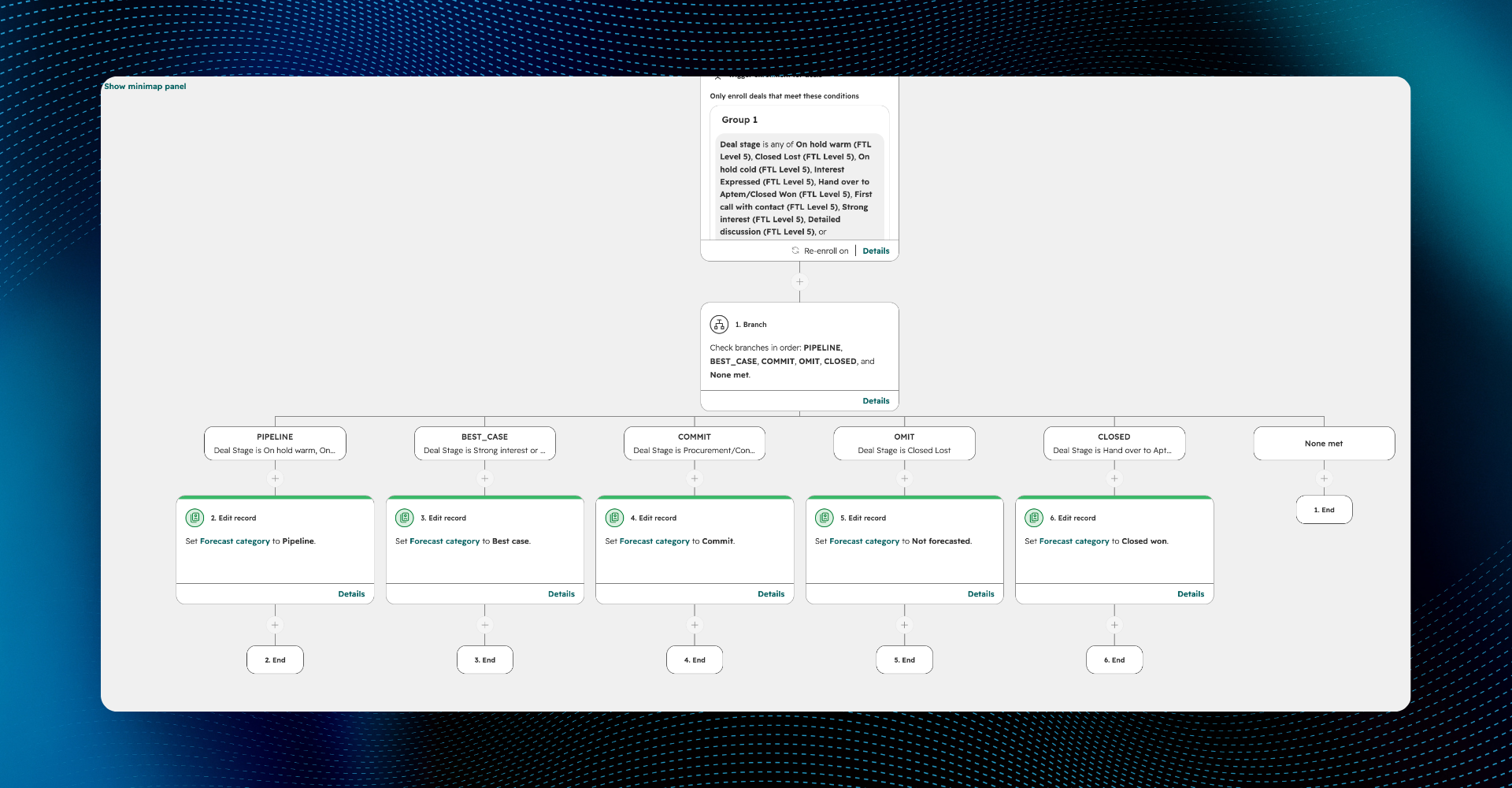
A Hubspot workflow example
And it’s not just HubSpot
The same thinking runs through a lot of my work.
It can be working with developers on a website – shaping the brief, thinking through the user journey, making sure forms and CRM connections work and keeping the project moving.
It can be planning everything around a webinar, whitepaper or event – registration, communications, content, follow-up and what happens to those contacts afterwards.
It can be working with Dan on the creative and content a campaign needs, or with James on SEO, search, AI or the wider digital picture.
It can be writing the copy myself, briefing a film or photography shoot, producing an event, building an email journey, setting up HubSpot campaigns and dashboards, or coordinating several different people to get something delivered.
Sometimes it’s simply being the person who knows enough about all the different moving parts to spot what’s missing, ask the right questions and get the right person involved.
Where fractional support fits
We’ve had fractional support as part of the Rhodium offer for a while, but we haven’t really talked about it very much.
The work I’m doing with one of our retained clients is giving us a much clearer real-life example of what Fractional Marketing Operations can look like.
They already have a CMO and internal team. They don’t need another person telling them what their marketing strategy should be. They need experienced capacity alongside them – someone who already understands the business, can pick up a substantial piece of work and get into the detail without needing every step defined.
For another organisation, that gap might look completely different.
It could be a CEO who needs experienced marketing support but isn’t ready for another senior full-time hire. Or a Sales Director who needs marketing, CRM, prospect data, content and outbound activity to work together more effectively.
And because I sit within Rhodium, it’s not just my skillset they can access. I can pull Dan into a creative problem, James into SEO, search or AI, our developers into something technical, or our wider production network into film, photography or animation.
That’s where I think the fractional model gets particularly interesting for us.
The other side of Rhodium
Our portfolio will probably always lead with the things people can see: campaigns, films, websites, animation, photography and content.
And it should.
But behind that is a lot of marketing thinking, CRM, customer journeys, lead generation and sales enablement, content planning, digital, events, systems, project management and day-to-day problem solving.
I wouldn’t describe myself purely as a Marketing Operations specialist. My background is much broader than that.
Perhaps that’s the useful bit.
I understand marketing, clients and creative. I understand enough of the technology to know what we need from it. And I know when we need someone with deeper specialist expertise.
If you’re a CMO, CEO or Sales Director who could use that kind of experienced support – whether that’s a few days a month or an extra pair of hands and brain around a particular challenge – get in touch and we can have a chat about where Rhodium could fit.
