Real stories matter. But is authenticity enough to cut through?
After four years judging the Third Sector Awards, Dan Ridge looks at why real stories still matter, where creativity comes in, and what makes some charity campaigns stay with us.
I’ve just finished judging the Third Sector Awards for the fourth year running, and after watching and reading a lot of brilliant work, one thing kept coming back to me.
Real people. Real stories. Real experiences.
And that’s a good thing.
Some of the strongest charity communications are built around the people actually affected by an issue. They show the reality of what’s happening, where support goes and what a donation, service or campaign can mean in someone’s life.
But when you judge a lot of work back-to-back, you also start to notice the patterns.
Similar titles. Similar interview formats. Similar emotional cues. Similar journeys from problem, to personal story, to impact, to call to action.
Individually, many of them work. Collectively, they can start to blend into one another.
And I think that creates an interesting challenge for charities: how do you protect the authenticity of a story while finding a creative idea strong enough to make people actually notice it?
Authenticity isn't the creative idea
Authenticity matters. But increasingly, I think it’s the starting point rather than the differentiator.
One of the films that really stood out this year was I Know from Medical Aid for Palestinians, winner of Best Large Charity Film.
The team deliberately moved away from some of the familiar imagery associated with the subject. Instead, the narrator stays centred in the frame, looking directly at the audience. It’s an incredibly confident piece of filmmaking and almost impossible to look away from. That was one of the reasons I scored it so highly when judging.
The testimony is real, but there is a very clear creative decision about how we're asked to experience it. It doesn't distract from the story. It makes us pay attention to it.
Home is Where the Hurt is from Refuge , Highly Commended, took a completely different route. It borrows the familiar format of the aspirational online house tour, then gradually introduces small, unsettling details that reveal what's actually happening behind closed doors. Refuge and creative consultancy Revolt deliberately used that familiar social format to expose signs of domestic abuse that can otherwise be difficult to see.
When I judged it, what struck me was the restraint. There was clearly a lot of thought in the concept and the detail, but it didn't need to spell everything out. You discover the story as you watch, which made a very difficult message land incredibly powerfully.
Original doesn't always mean better
Then there was Misunderstood, created by AML Group for Tourettes Action, winner of Best Small Charity Film.
This one is important because I don't think the basic creative device was especially new. We've all seen music used to carry an emotional story before.
It was just done exceptionally well.
Grace Cope, who lives with Tourette syndrome, performs Don't Let Me Be Misunderstood alongside a choir of people who also live with the condition. It's such a good fit between the song, the subject and the people performing it that it feels completely natural.
I gave it 10/10. It was beautifully filmed, the song choice was inspired and the message was simple without feeling simplistic. Most importantly, I remembered it.
There's something useful in that too. We talk a lot in creative industries about finding the new thing, but cut-through doesn't always require an idea nobody has ever seen before. Sometimes it's about finding exactly the right idea for the story and executing it brilliantly.
Sometimes the channel is part of the idea
End the Horror from I Choose Freedom, finalist of Best Medium Charity Film, approached things differently again.
The film uses the conventions of horror to talk about domestic abuse. A woman is alone at home, familiar horror cues start to build and a masked figure appears. Eventually the threat is revealed to be someone she knows.
But what made the idea particularly clever for me was where people experienced it.
It ran around Halloween, before horror films across the DCM cinema network. So the audience was already sitting there waiting to be scared. The film takes that expectation and turns it towards a fear that is very real for women experiencing domestic abuse.
That combination of idea, timing and placement was one of the reasons it stood out when I judged it.
It also made me think about how often we separate the creative idea from the channel. We make a film and then decide how to cut it for social, where it goes on the website and whether we put paid media behind it.
Sometimes it's worth reversing that thinking. What could we make because of where somebody is going to experience it?
Cinema gives you opportunities social doesn't. A landing page can give a personal story room to breathe. Outdoor, events and interactive experiences offer something different again. The channel doesn't have to be somewhere you put the idea afterwards. It can help shape the idea in the first place.
Do you have to choose between creative and real?
That brings me back to the question I kept asking while judging: if real stories are so important, where does the creative idea fit?
It’s something we’ve had to think about in our own work too.
For Real Talk with Prostate Cancer Research, we were tackling the inequalities Black men face around prostate cancer. Real experiences had to be at the heart of the campaign, but we also needed to get people to stop and pay attention to an issue that has been talked about many times before.
Our answer wasn't to choose between a creative campaign and real-life storytelling. We used both.
We created a more crafted, ad-like hero film to give the campaign a strong creative hook and help introduce the issue. Around that, we created films with real patients talking much more directly about their own experiences.
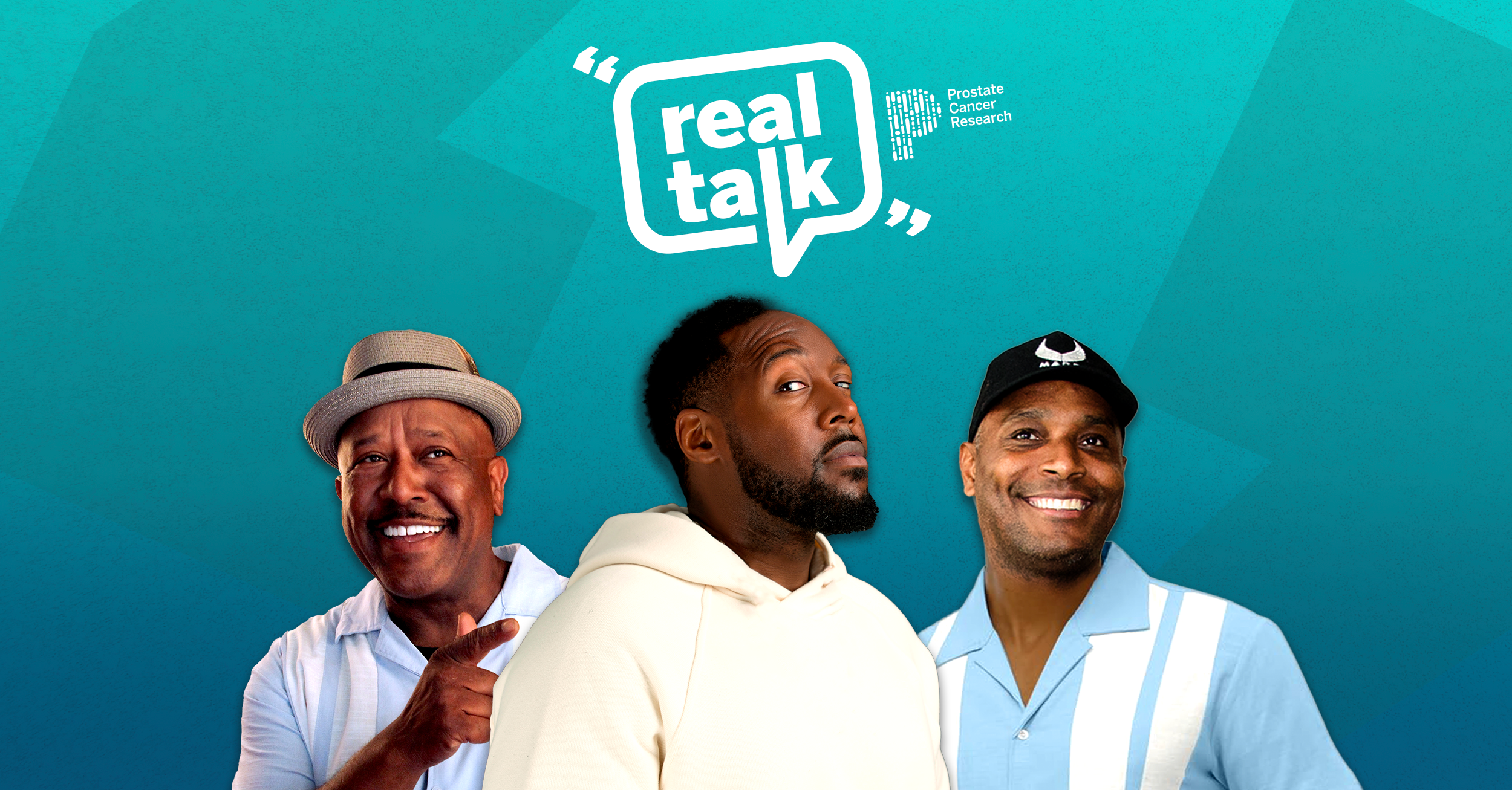
They did different jobs within the same campaign. The hero film helped us get attention and establish an idea; the patient stories brought a level of honesty, depth and personal experience that we couldn't, and shouldn't, try to manufacture.
And I think that's the important bit. Creativity doesn't have to replace authenticity. It can create the reason somebody stops long enough to hear the authentic story.
Sometimes the most powerful approach will be a real person simply telling you what happened to them. Sometimes you'll need a stronger creative device to get someone through the door first. And sometimes, as Misunderstood showed so well, the real people and the creative device can sit together in exactly the same piece.
Perhaps that's a better question than creative versus real: what role does each need to play to make this particular story connect?
The people behind the work
I also judged Rising Star, Unsung Hero and Rising Chief Executive this year, which was a very different experience and probably one of the most rewarding parts of the process.
Again, authenticity mattered, but in a slightly different way. The people who stood out weren't simply those with the biggest job title or longest list of achievements. They were people whose personality, experience and motivation came through in what they'd done.
Joni Emery of Clinks, winner of Rising Star, stood out for using her own lived experience to drive positive change. She has led new initiatives and created opportunities for other people to have their voices heard.
Ben Black of the Royal National Lifeboat Institution, winner of Unsung Hero, identified a challenge affecting charities more widely and created an innovative solution that improved safety, accessibility and fundraising. What stood out to me was that he'd done all of that without seeking recognition himself, which feels particularly appropriate for this award.
And Adam Pemberton Wickham of akt, winner of Rising Chief Executive, has made a strong start in his first CEO role, supporting more young people, launching new initiatives and driving important campaigning work in a particularly challenging environment.
Congratulations to all three, and to everyone shortlisted across the categories I judged.
Where that leaves me
I don't think the answer is to move away from real stories. Quite the opposite. Some of the most powerful work I judged this year was powerful precisely because there was a real person at the centre of it.
But authenticity and creativity aren't competing choices. The challenge is finding the creative treatment, execution or context that helps that real story get noticed in the first place.
Sometimes that will be a genuinely new idea. Sometimes, as Misunderstood showed, it will be a familiar idea executed so well that you couldn't imagine a better way of telling the story. And sometimes, as with End the Horror, where and when someone encounters the work becomes part of the idea itself.
Four years of judging has probably made me more conscious of this because you see good work alongside other good work. That's when differentiation becomes much easier to spot.
Being truthful matters. Being memorable matters too.
The best work manages both.